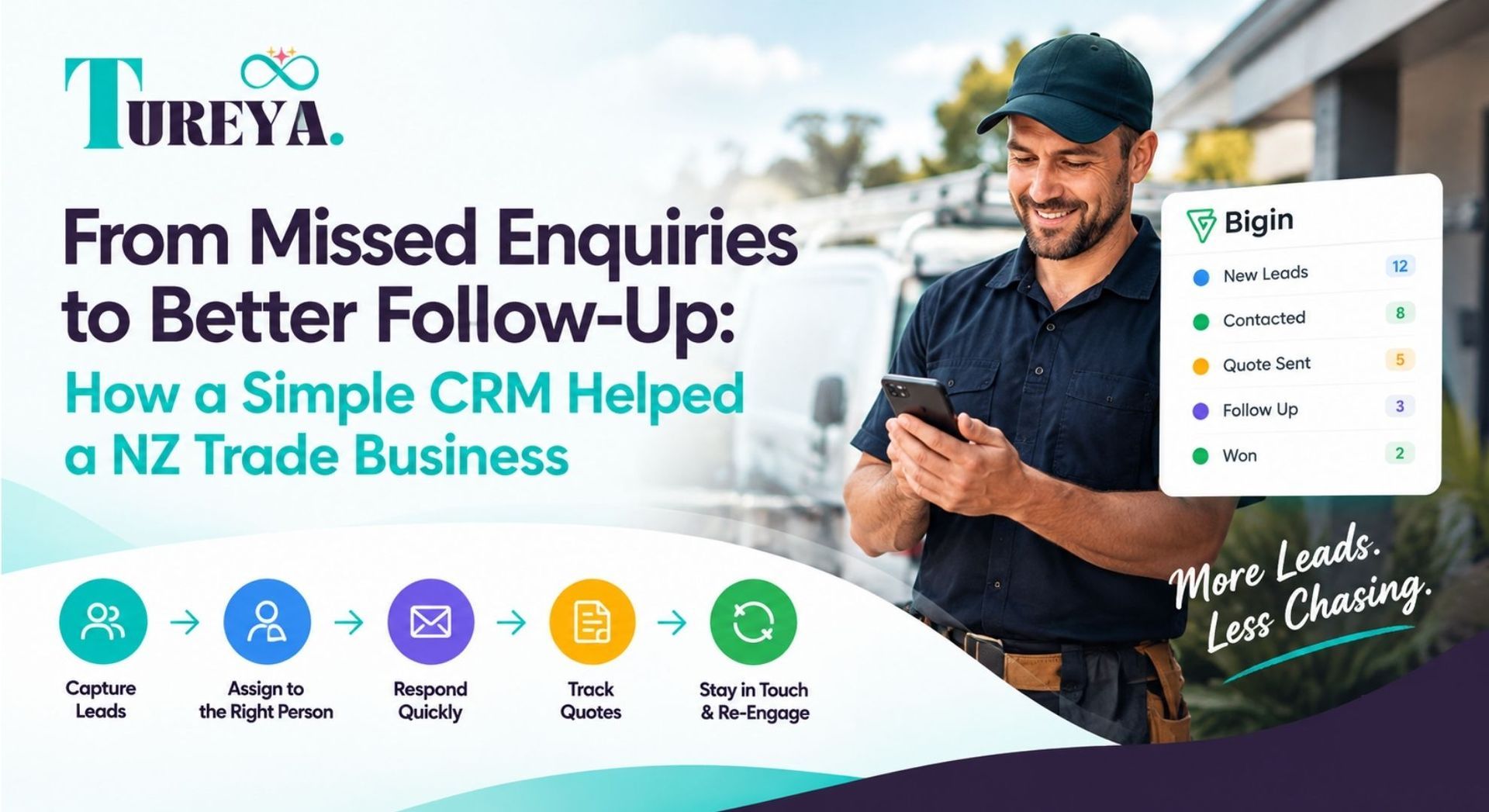
From Missed Enquiries to Better Follow-Up: How a Simple CRM Helped a NZ Trade Business
From Missed Enquiries to Better Follow-Up:
How a Simple CRM Helped a NZ Trade Business
A business can spend good money attracting new customers and still lose them the moment an enquiry lands.
That was the situation for a small New Zealand trade business we worked with. They had just introduced a new line of services and put serious money behind Google Ads and Meta Ads. It worked, and enquiries started coming in. But handling those enquiries turned out to be a different problem altogether.
The Challenge: Enquiries Were Coming In, but Some Were Being Missed

Before the CRM, there was no single place to record an enquiry and see how it was going. Leads arrived from different channels, and there was no set way to sort them, hand them to the right person, or track what happened next. Some customers waited too long for a reply. Others were never contacted at all.
It was the same story after a quote went out. Follow-up depended on someone remembering to do it, and past customers were rarely contacted about other work they might need.
In a competitive trade market, that’s costly. Customers don’t sit around waiting. If we’re slow to reply, they simply call the next business on the list. So
some of the money spent on advertising was being wasted after the enquiry had already come in.
The business didn’t want a heavy, expensive system that created more admin. They wanted something simple, easy for the team to pick up, affordable for a small business, and able to take care of the repetitive work automatically.
The Solution: A Simple CRM Built Around the Business
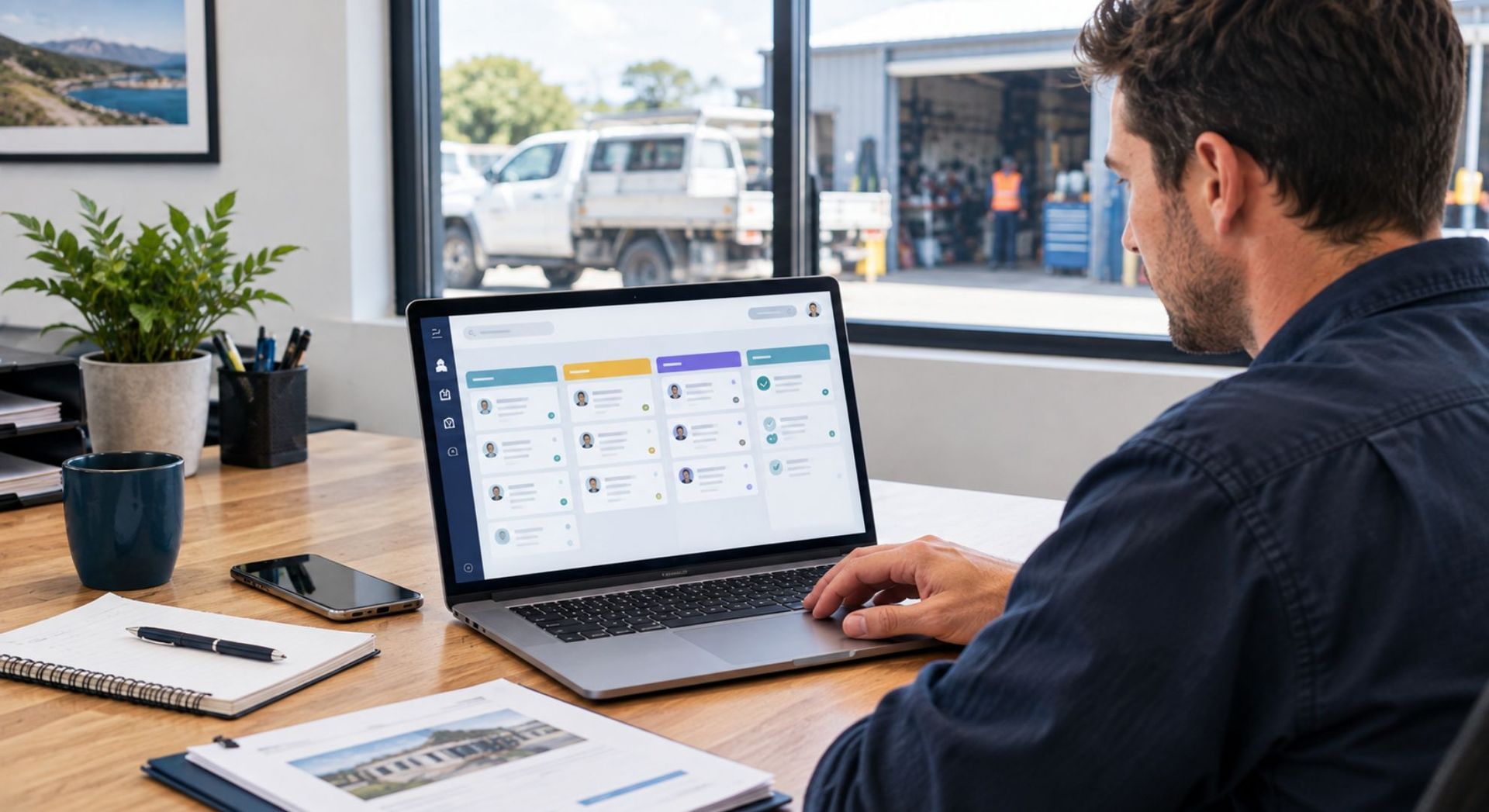
We set up Bigin CRM to match the way the business already sold. The goal wasn’t to bring in a complicated system. It was to make every day work easier and make sure no enquiry was left without a next step.
Here’s how it works now:
- Bringing leads together: Enquiries from Google Ads and Meta Ads all land in one pipeline, so nothing gets scattered across inboxes, messages and spreadsheets.
- Getting them to the right person: Each enquiry is sorted by what the customer is asking for and sent straight to the team member best suited to handle it.
- Responding quickly: Customers get an automatic confirmation, and the right staff member is alerted right away.
- Keeping quotes on track: Reminders and follow-ups are scheduled, so a quote doesn’t quietly slip through the cracks.
- Staying in touch afterwards: Past customers receive a thank-you message and an invitation to leave a Google review. Later, a check-in asks whether they need any more work done.
Put together, every lead now follows the same path: captured, assigned, acknowledged, followed up, quoted, nurtured and, later, re-engaged.
None of this is flashy, and that’s the point. The CRM acts as the bridge between marketing and sales. Automation handles the repetitive jobs so the team can spend its time talking to customers.
The Result: Less Chasing, More Consistent Follow-Up

The biggest change wasn’t the CRM itself. It was having a repeatable way to handle leads.
Every enquiry now gets captured, passed to the right person, acknowledged and followed up in a set order. The team no longer has to keep it all in their heads or wonder what should happen next. That means less chasing, fewer missed leads, and a better chance of turning enquiries into jobs.
It also opens the door after the work is done. A happy customer can become repeat work, a referral or a Google review.
One thing we want to be upfront about: we haven’t measured sales growth for this business, so we won’t promise a revenue figure. What we can say is that lead management is tidier and follow-up is far more consistent.
And the cost? The subscription comes in at less than the price of two coffees a month. You don’t need an enterprise system to get this kind of order.
What This Means for Other Small Businesses
If you’re spending on Google Ads or Meta Ads, getting the enquiry is only half the job. What happens in the next few hours and days matters just as much.
A good CRM doesn’t have to be pricey or complicated. It needs to fit the way your team already works and fix a real problem. If enquiries are getting lost, follow-ups keep slipping, or admin is quietly eating more of your week,
take a look at how you handle leads. It’s a good place to start.
Start with the leads. Everything else gets easier from there.
How Tureya Can Help
Most businesses don’t need a fancy CRM. They need one that works the way their team already does. That’s what we do. We start by looking at how enquiries really move through your business today: who picks them up, where they stall, what gets forgotten. Then
we set up the CRM and automation around that, and we stay on to help your staff actually use it, because a tool nobody opens is just another monthly bill.
So, if leads are coming in but following up feels like a juggling act,
let’s talk. No big pitch. Just a conversation about what’s going wrong and what would fix it.
Frequently Asked Questions
1. How can a CRM help a small business stop losing leads?
A CRM keeps enquiries in one place, assigns responsibility and helps track follow-ups. Automation can also send acknowledgements and reminders so fewer opportunities are overlooked.
2. Does a small business need an expensive CRM system?
Not necessarily. The best choice depends on your needs, budget and workflow. A simple system the team uses consistently is often more useful than a complex platform full of features you don’t need. In this case, the subscription cost less than two coffees a month.
3. Can a CRM follow up with customers automatically after a quote?
Yes. Depending on the system and how it’s set up, a CRM can schedule reminders or send follow-up messages after a quote is issued. That helps the team keep in touch without relying on memory.
Recent Posts