CRM Transformation: Building a System That Converts More Leads into Revenue
CRM Transformation: Building a System That Converts More Leads into Revenue
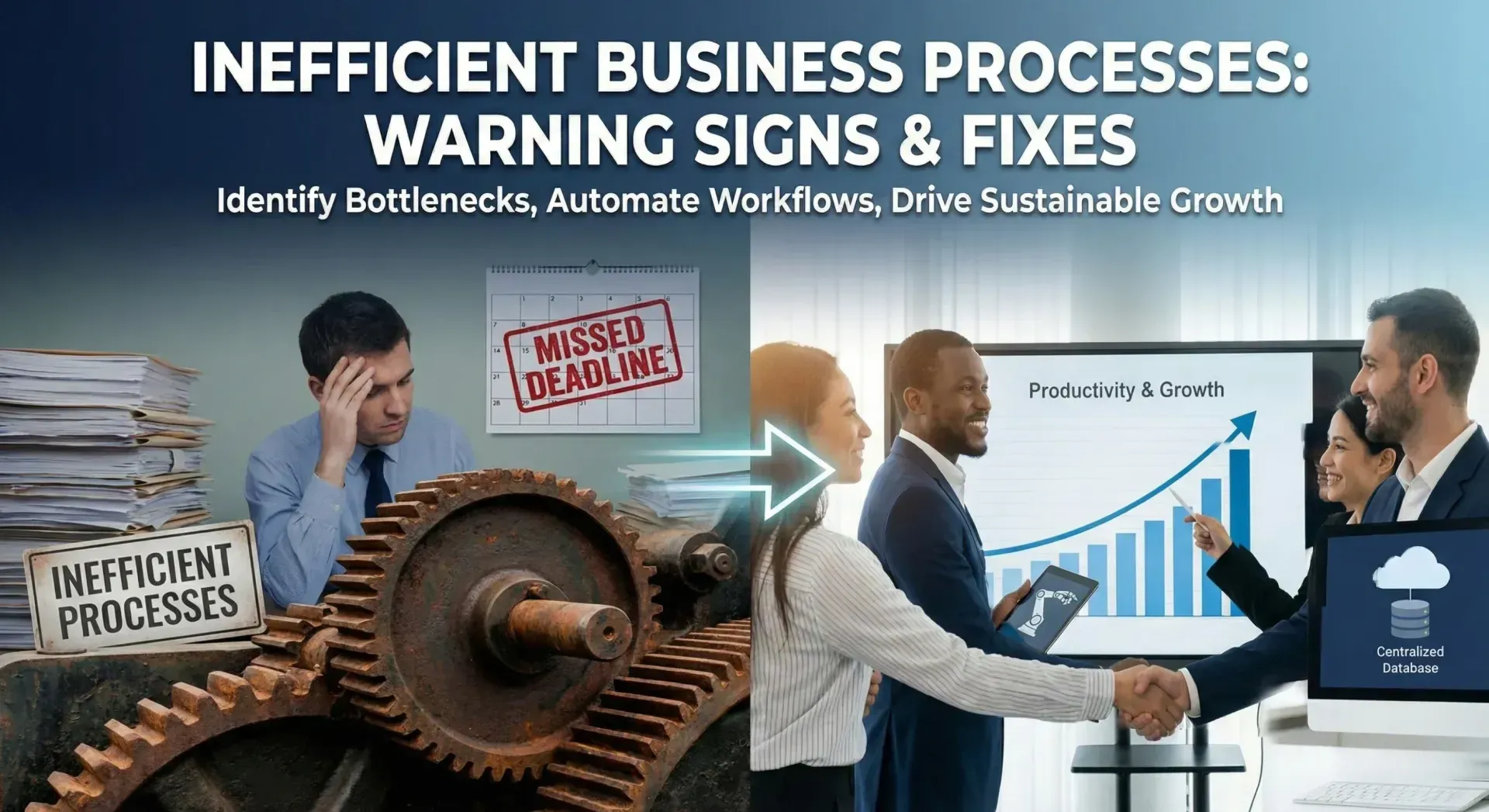
Many small businesses rely on manual processes to manage their leads. A busy phone and fuller mailbox mean more revenue. However, businesses often miss their opportunities due to inefficient processes.
That was exactly the situation facing a residential home builder based in Auckland. As their enquiries increased, their manual approach started to undermine sales performance. As a result, there were multiple missed leads and lost opportunities.
Traditional Lead Tracking Becoming a Roadblock to Business Growth
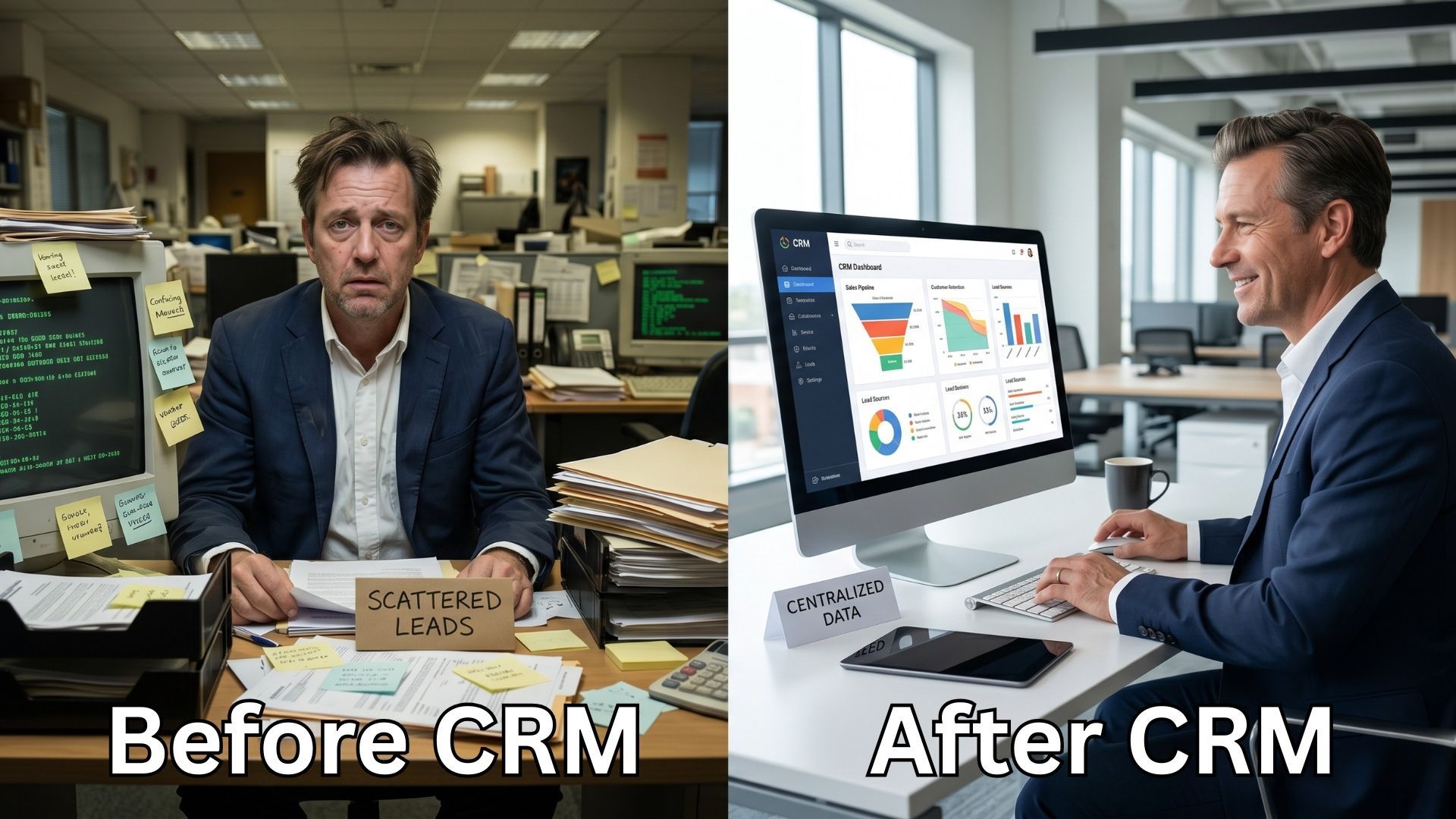
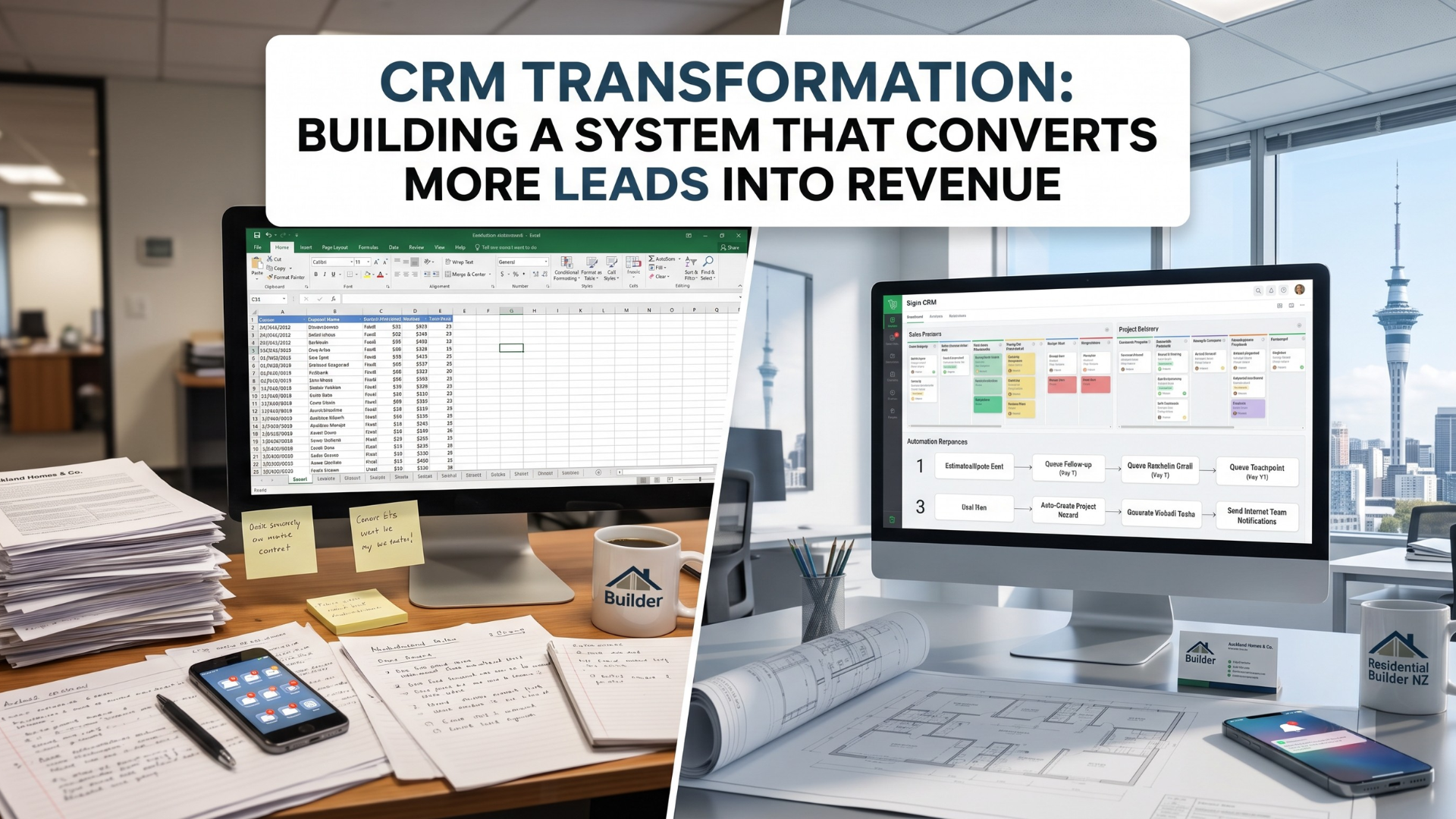
From web forms to Facebook messages, and phone enquiries, the small business had opportunities from multiple sources. They tracked their leads in Excel spreadsheets.
Each lead landed in a different place, tracked by a different person. The customer information was also scattered across email boxes. There was neither a central database nor a standard process for qualifying new enquiries. Sales decisions depended heavily on memory, and when things got busy, leads fell through the cracks.
With the increasing enquiries, their response time reduced, leading to missed opportunities. There was limited visibility in sales performance. Resultantly, forecasting future revenue became difficult.
Finding the Right CRM Tool That Does More Than Manage Leads

What the team needed for the right CRM tool that was not only affordable but also User-friendly. After assessing their existing processes, we recommended a CRM solution that aligned with their business needs.
The deciding factors went beyond price. Bigin offered multiple sales pipelines, workflow automation, contact management, email integration, and reporting dashboards. Critically, it could also manage project workflows, eliminating the need to pay for a separate project management tool.
With the monthly investment of $12-15, the business could easily manage sales and project workflows.
The Implementation Process: Transforming Sales and Project Management

Building a Sales Process From Scratch
The first step in implementing the CRM was creating a structured sales pipeline. Stages included New Enquiry, Qualification Call, Site Visit Scheduled, Site Visit Completed, Estimate Prepared, Quote Sent, Negotiation, and finally Won/Lost.
This alone was transformative. For the first time, the team had complete visibility over every active opportunity. They could also easily track their sales progress.
Creating Project Delivery Pipeline
A second pipeline was built for the project delivery stage. It covered stages from contracts signed through design and planning, council consent, construction progress, and handover.
This seamlessly connected the sales side of the business with operations management. As a result, the communication gap was reduced, and project visibility improved.
Automation Implementation
Automation became a game-changer for the business. When a new enquiry arrived through the website, it was automatically entered into the CRM. It created a deal record which was assigned to a staff member.
The tool sent an instant notification, reducing the response times. As a result, customer experience improved significantly.
Quote Follow-up Automation
With the quote follow-up automation, there was not a single chance to miss any leads. When a quote was sent, a follow-up task was automatically scheduled for 3 days later. There was also a reminder email queued for 7 days, and another touchpoint set for 14 days.
With the consistent reminders, the business could avail most of the opportunities it had.
Won Deal Automation
Finally, when the deal was won, the CRM tool automatically created a project record. It generated kickoff tasks and triggered internal notifications to relevant team members. As a result, the transition from sales to delivery became project structured.
With a smooth workflow, the business could generate higher revenue. The staff members could also work without any stress.
The Impact: Improving Operations, Sales, and Revenue Visibility

With the CRM tool implementation, the business gained real-time visibility in sales and project management. The sales dashboard tracked metrics such as new enquiries, quotes sent, conversion rates, revenue forecast, and performance by lead source.
On the project side, dashboards highlighted the number of active projects, upcoming completions, delayed jobs, and overall project status. Before implementing the CRM, the business was receiving around ten enquiries per month and converting approximately ten percent of them.
Based on a conservative calculation:
- The business was closing roughly one project per month, or twelve projects per year. At an average project value of $100,000, this represented approximately $1.2 million in annual revenue potential.
- After implementing the CRM, improved enquiry capture processes increased enquiry volume by an estimated ten percent.
- The improved follow-up and lead management process helped increase the conversion rate from an estimated ten percent to twenty percent.
Based on these calculations, the business had the potential to increase project wins from approximately 12 per year to 26 per year, representing an estimated annual revenue opportunity of around $2.6 million. There was an increase of $1.4 million from the investment of only $3000.
If these challenges sound familiar, you may already be experiencing the early warning signs discussed in our guide 5 Signs Your Organisation Needs a CRM Transformation.
Key Insights: Turning Enquiries Into Opportunities
The experience of this Auckland builder points to four lessons:
- Most small businesses initially have a high enquiry volume. However, without proper workflow, they remain unable to successfully convert them into opportunities.
- Speed matters more than most builders realise. Prospects shopping for a builder are often contacting multiple businesses simultaneously. Responding to an enquiry quickly substantially increases the likelihood of winning the project.
- Follow-up is where most business is won or lost. A business that follows up reliably will win business that its competitors never knew they lost.
- A CRM that connects both sales and project delivery functions creates a better customer experience. It also reduces the internal confusion that often accompanies business growth.
A Simple System, A Significant Return
Even with growing opportunities, businesses often lose revenue to process failures. For building companies operating in competitive markets, implementing CRM has become a necessity.
It offers a structured system to capture, convert, and deliver on every opportunity. With a smooth workflow, builders can improve conversion rates, increase visibility, and support business growth.
Interested in seeing how CRM could streamline your building business? Contact us for a free CRM assessment and implementation roadmap.
FAQs
1. Can CRM Help with Sales for a Small Business?
Of course, CRM is helpful for small business’ sales. It helps with sales for a small business by automating manual tasks. For example, it helps in tracking the leads, allowing frequent follow-ups, and creating a sales pattern to get more opportunities.
2. Is CRM Beneficial for Small Business?
CRM is as beneficial for small businesses as it is for big ones. It does so by helping in
multiple aspects including storing and organizing data, providing an accurate sales record, automation of time-taking manual tasks, and helping in cross-selling and upselling.
3. Why is My Business Failing Even After Receiving Multiple Leads?
One of major reasons why businesses fail even with good traffic is the lack of CRM.
You might lack the tool that allows you to keep a track of your leads, follow the leads
promptly, and remind you follow-ups of the potential leads.
Recent Posts